Evaluating Deposit Models in Rental Housing
The rental housing landscape is expanding with new deposit-related options, each claiming to improve the move-in experience or simplify operations. While these solutions appear similar at first glance, the way each one works and who it benefits can be very different.
For operators reviewing deposit programs, the most effective approach begins with understanding the solution types and the factors that influence performance for both properties and residents. This guide outlines the major deposit models as well as the key considerations that show how they function in practice.
Types of Deposit Solutions in Today’s Market
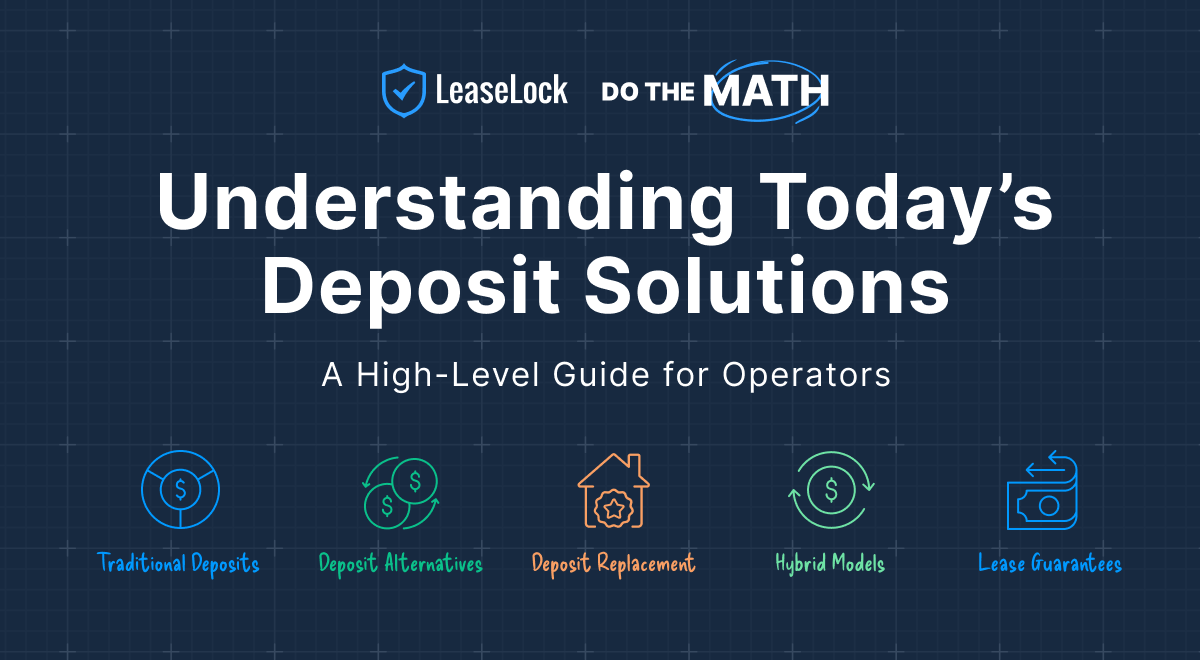
1. Traditional Deposits
Residents pay cash at move-in, and properties hold those funds until move-out. This model is familiar but increasingly out of step with today’s leasing environment.
2. Deposit Alternatives
These products remove the upfront deposit but rely on surety-style agreements tied to renter credit or banking information. They reduce move-in cost yet still involve resident qualification or repayment if a claim occurs later.
3. Hybrid Deposit Models
A blend of renter-facing and property-facing features. These options may offer partial protection but still depend on resident approval and additional steps that can complicate the experience.
4. Lease Guarantees
Programs that assist residents who do not meet screening criteria. They help with approval but are not designed to take the place of deposits or address move-out costs.
5. Deposit Replacement
A property-first model that removes deposits entirely and applies consistent protection across the portfolio through PMS automation. Residents benefit from lower move-in costs and a smoother process, while operators remove complexity.
These five categories define how deposit solutions work today. Understanding their differences helps operators choose a model that supports performance, transparency, and resident trust.
Key Things to Consider When Evaluating Deposit Solutions
To evaluate each solution type, operators can use five objective categories that reveal how these products influence operations and the resident experience.
Coverage Type and Customer Model
What does the product protect, and who is the customer in the transaction?
Traditional deposits and renter-facing products place responsibility on the resident, while deposit replacement uses a property-first approach that simplifies protection and reduces complexity.
Enrollment, Pricing, Collections, and Conversion
How does each model enroll residents, determine price, and respond when a cost occurs?
Solutions that rely on resident sign-ups or approval create inconsistent participation. Deposit replacement applies protection through PMS activation, resulting in steady, predictable coverage without added steps for residents or teams.
Compliance and Financial Performance
Does the solution support a consistent structure across markets, and does it improve portfolio performance?
Some models introduce uncertainty or inconsistent results. Deposit replacement provides a clear, property-backed approach that supports financial outcomes and operational consistency.
Integration and Workflows
How does the solution interact with the systems and processes your teams already use?
Renter-driven products often require external portals or separate workflows. Deposit replacement activates directly through the property’s existing PMS, reducing manual work and allowing teams to stay focused on leasing.
Resident Experience, Reputation, and Compatibility
How does each model impact the resident’s experience before, during, and after move-in?
Solutions that rely on resident fees, qualification steps, or repayment can create confusion and stress. Deposit replacement simplifies the move-in experience and works well alongside lease guarantee programs for additional resident support.

Why Deposit Replacement Stands Out
Across every category, deposit replacement offers a balanced and effective model that supports today’s operators and delivers a better experience for residents. It removes outdated deposit processes, reduces friction, works seamlessly within existing systems, and provides consistent protection across the entire portfolio.
Operators who want simpler leasing, stronger performance, and a transparent resident experience are increasingly turning to deposit replacement as the preferred approach.
The Bottom Line
Comparing deposit solutions requires a clear understanding of how each model works and how it impacts both operations and the resident journey. By focusing on coverage, enrollment, workflow, financial impact, and resident experience, operators can choose a model that supports long-term performance and trust.