Beneath the Headlines
Authors: Janine Steiner Jovanovic & Greg Willett
October 22, 2029
Are renters financially equipped to sustain multifamily’s current momentum? The headline data looks great right now, but when you dig into the numbers, a clear divide emerges. I sat down with LeaseLock Chief Economist, Greg Willett, to look beneath the headlines. We discussed the state of household wealth for younger demographics, inflation trends, supply expectations, and what it all means for NOI.
Janine: How optimistic should we be Greg? So much of the data coming out is encouraging. The supply surge is over. Apartment absorption is solid. Demand is running at typical levels. The job numbers are a bit ahead of expectation. Renewal rents are holding steady and new lease rents are on the rise.
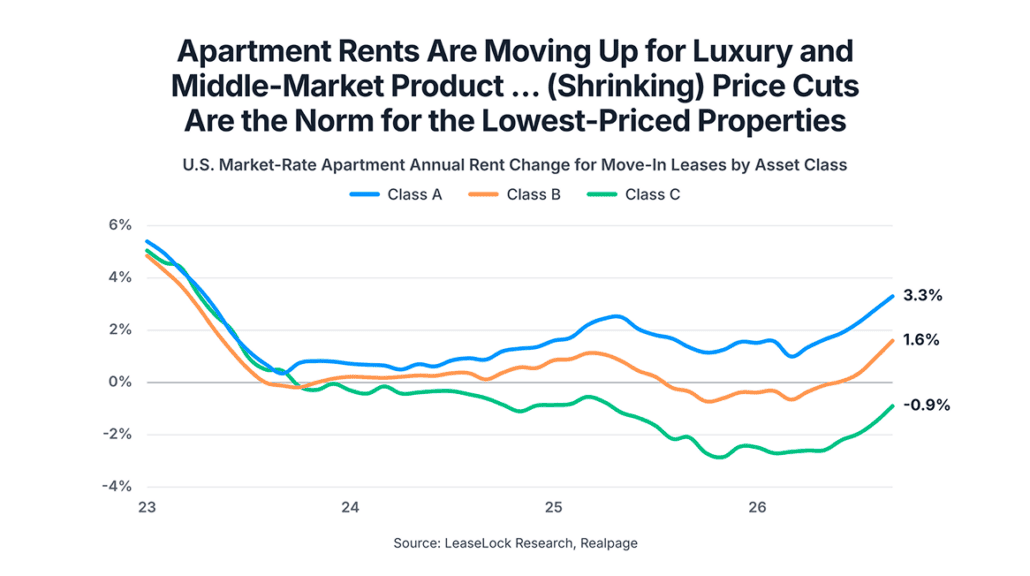
Greg: Clearly, you’re gaining momentum at the top of the market. Performance is improving and concessions are starting to burn off. We’re seeing the signs of a new cycle starting. What normally comes next is improvement for Class B apartments, which is essentially 50% of the rental stock. If you look at most forecasts, economists are assuming that happens. For me, the affordability question is an important one. Class A renters are in a position to absorb higher rents. Middle market renters could present a challenge. They’re financially squeezed much more than in past cycles.
Janine: The Fed just released new data that was pretty sobering. Total household wealth rose over the past 3 years, but not for everyone. The median net worth of Americans 75 and older rose 37% after inflation, while those 35 and under declined 23%. The majority of market rate, investment grade properties in this country rent apartments to younger households. Do renters have the spending power to keep the momentum going?
Greg: That data is very meaningful. The differences between the most affluent and the middle market consumer are stunning. It’s not about wage growth, which is pretty even across the income spectrum at an average of 3%. It’s about household wealth. If you’re a wage earner that didn’t have assets to begin with, you’re not accumulating any wealth.
Janine: Which means you’re living off wages and savings. We’ve watched the savings rate decline rapidly over the past few years, and credit card debt climb just as dramatically. But spending data suggests consumers are healthy.
Greg: Overall consumer spending stats are good, but it’s the top 10% of U.S. earners that account for half of all spending. Only the most affluent households have room to spend beyond household necessities.
Janine: That’s because income growth keeps trailing inflation. Everyone’s buying power is declining.
Greg: Middle income consumers have been cutting back. They’ve adjusted spending in virtually every category where you can do a substitution or increased their dependence on credit. What comes next when more adjustments are needed for necessities? You can’t really change your electric bill, your gas bill or your medical bills. The largest and most controllable expense is housing. Thus I’m concerned moving ahead with middle market consumers. Where will they get the money to pay for rent increases?
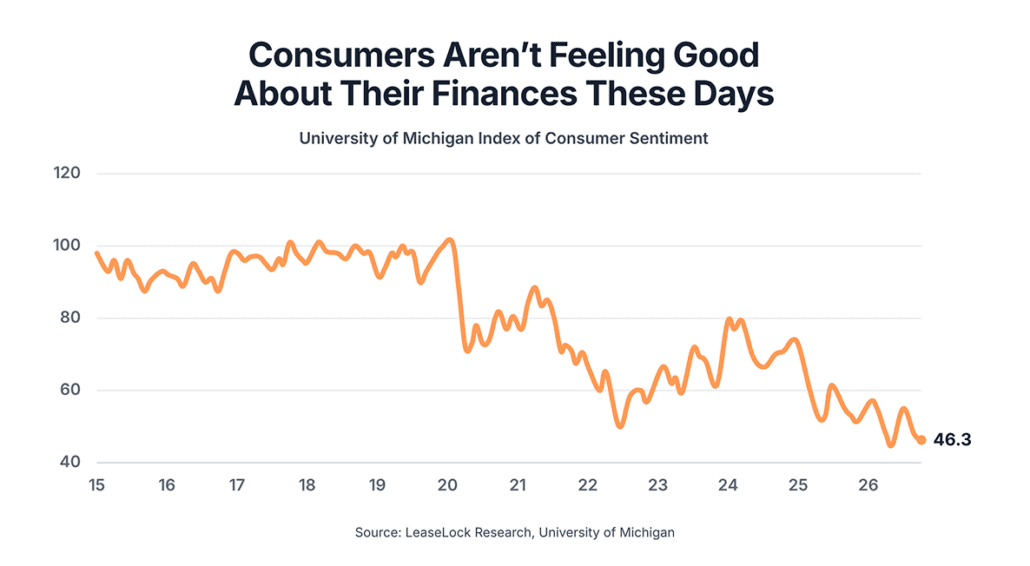
Janine: The Producer Price Index just came out too, which is the inflation rate for the people making what we buy. It doesn’t appear that inflation relief is on the horizon. In fact, it looks like things are going to get worse.
Greg: That monthly PPI number was much higher than expected. It came in at 1.3% instead of 0.5%, driving annual change to 6.3%. Right now, consumer price inflation is 3.7%. If we’re paying that much more than a year ago and the people making what we buy are paying 6.3% more than they did a year ago, that says the pace of price growth will go up. Apartment expenses are going to rise faster than revenue again in 2027.
Janine: To sum it all up Greg, it feels like we’re on the right path to improvement on the rent growth side, but there’s a lot that can still go wrong. We can see a recovery on the horizon but it may be moving farther out.
Greg: While I’m optimistic, the risk remains high.
Janine: What could meaningfully improve fundamentals near term Greg?
We’ll dive into those potential catalysts, and what the industry is doing to navigate this unique economic climate, in Part 2 of our conversation next week.

The industry is being redefined by persistent affordability challenges, a housing shortage, and rapid technological advancement. Executive Outlook is a forum where we explore the forces shaping rental housing and provide the intelligence needed to navigate the future.